Faro Editorial

AI discoverability, explained.

Practical guides on AI readiness, structured data, llms.txt, and how to make sure AI agents find, understand, and recommend your business.
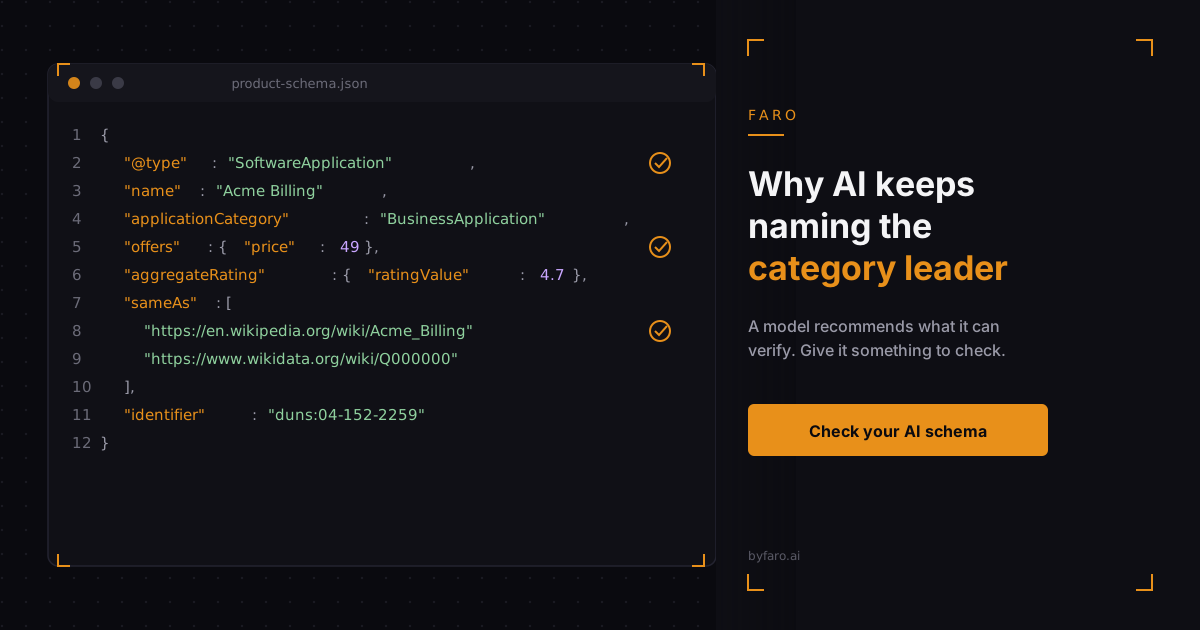
Split diagram showing an AI crawler reading visible HTML body text on the left while a JSON-LD script block sits greyed out and unread on the right, with citation effect figures for AI Overviews, AI Mode, and ChatGPT
Structured Data

Schema Didn't Boost AI Citations. Here's What It Actually Does

A controlled study of 1,885 pages found adding JSON-LD produced no citation lift on ChatGPT, AI Mode, or AI Overviews. A separate retrieval test found five major AI systems read only visible HTML and ignored schema entirely. Schema is still worth publishing, but for accuracy rather than citations. The lever that actually moves is where you put your answer on the page.

Jul 28, 2026 · 9 minRead →
Flow diagram of an AI agent moving through discovery, pricing, comparison, authentication, and checkout stages on a website, with two stages marked as blocked
Agent Accessibility

Can AI Agents Actually Buy From You? A Guide to Agent Commerce Readiness

Being recommended by an AI agent is only half the job. The other half is whether that agent can actually get from your homepage to a completed transaction. This guide covers the five points where agent checkout fails, what to publish so it doesn't, and how to test your own site.

Jul 27, 2026 · 9 minRead →
Diagram showing MCP server connecting AI agents to business data sources and tools
Agent Infrastructure

MCP Servers: What They Are and Why Your Business Needs One

MCP servers are the connective tissue between AI agents and your live business data. Without one, AI tools answer questions about your company with outdated or incomplete information. This article explains what MCP servers do, who needs them, and how to set your infrastructure up before your competitors do.

Jul 27, 2026 · 8 minRead →
Perplexity AI search results page showing brand citations and AI answer optimization signals
AI Visibility

Perplexity Optimization: How to Appear in AI Answer Results

Perplexity is now a primary research tool for B2B buyers, yet most brands have zero presence in its answers. This guide breaks down the exact signals Perplexity uses to select cited sources and gives marketers a step-by-step plan to appear in results. From structured data to llms.txt, every fix here has a direct commercial payoff. Brands cited first by AI are 389% more likely to be Googled afterward — so the stakes are real.

Jul 26, 2026 · 6 minRead →
Diagram showing how AI search engines retrieve and evaluate business information for citations
AI Visibility

How AI Search Engines Find and Evaluate Businesses

AI search engines don't crawl and rank the way Google does. They retrieve, synthesize, and recommend — and the signals they trust are structurally different from classic SEO. This article breaks down exactly how ChatGPT, Perplexity, and Gemini evaluate businesses, which technical signals matter most, and how marketers can close the gap between being indexed and being recommended.

Jul 25, 2026 · 7 minRead →
Diagram of a Google search results page with an AI Overview box at the top, showing three cited source links being pulled from structured web content below
AI Visibility

How to Show Up in Google AI Overviews (Without Chasing the Algorithm)

Google AI Overviews pull from a small set of sources Google trusts to answer a query directly. Winning a citation is less about ranking tricks and more about being unambiguously the best-structured answer. This guide covers what earns a spot, how to measure it, and the mistakes that keep good pages invisible.

Jul 20, 2026 · 9 minRead →
Comparison diagram showing AI SEO signals versus traditional SEO ranking factors on a search results page
AI Readiness

AI SEO: What It Is and How It Differs from Traditional SEO

AI SEO is no longer a future concept — it is the primary battleground for brand visibility in 2026. This article breaks down exactly how AI SEO differs from traditional SEO, which signals actually matter to AI agents and answer engines, and what practical steps marketers can take today. If your site was built for Google's ten blue links, it is already behind.

Jul 19, 2026 · 8 minRead →
WebMCP protocol diagram showing an AI agent sending structured tool calls to a website through the browser, with callable functions returning JSON results
AI Agent Readiness

What Is WebMCP? The Protocol Deciding Whether AI Agents Can Use Your Website

WebMCP is a browser-native protocol co-developed by Google and Microsoft that lets websites declare callable functions for AI agents, replacing fragile DOM scraping with structured tool calls. With an origin trial live in Chrome 149 and the Lighthouse Agentic Browsing category now shipping by default, there are concrete things to audit and fix on your site right now.

Jul 14, 2026 · 9 minRead →
Diagram showing an AI agent parsing an OpenAPI specification and structured API documentation
Agent Accessibility

API Documentation for AI Agents: Why Your Docs Are the New Sales Page

When an AI agent evaluates your product, your API documentation is often the first thing it reads and the main thing it judges you on. This guide covers what agents actually parse, the difference between human-friendly and machine-friendly docs, and seven concrete fixes you can ship this week.

Jul 13, 2026 · 10 minRead →
1234

34 articles published