Faro Editorial
AI discoverability, explained.
Practical guides on AI visibility, structured data, llms.txt, and how to make sure AI agents find, understand, and recommend your business.
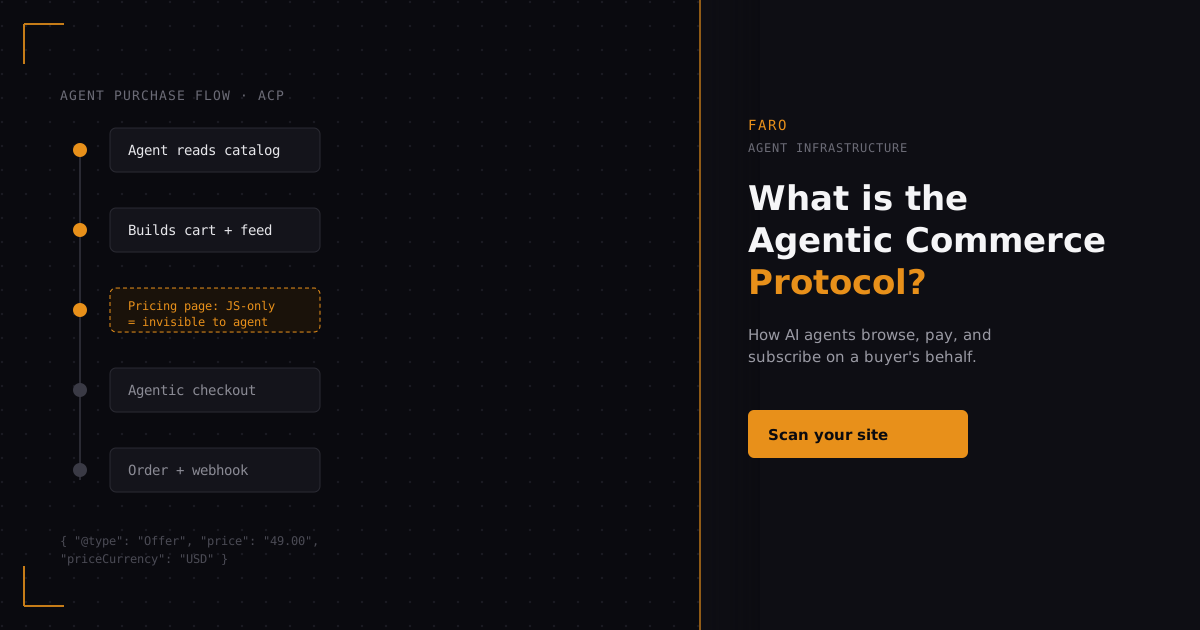
What Is the Agentic Commerce Protocol? How AI Agents Buy From You
A plain explanation of the Agentic Commerce Protocol (ACP), the open standard from Stripe, OpenAI, and Meta that lets AI agents browse, check out, and subscribe on a buyer's behalf, and what your pricing and product pages need to expose before an agent can act on them.
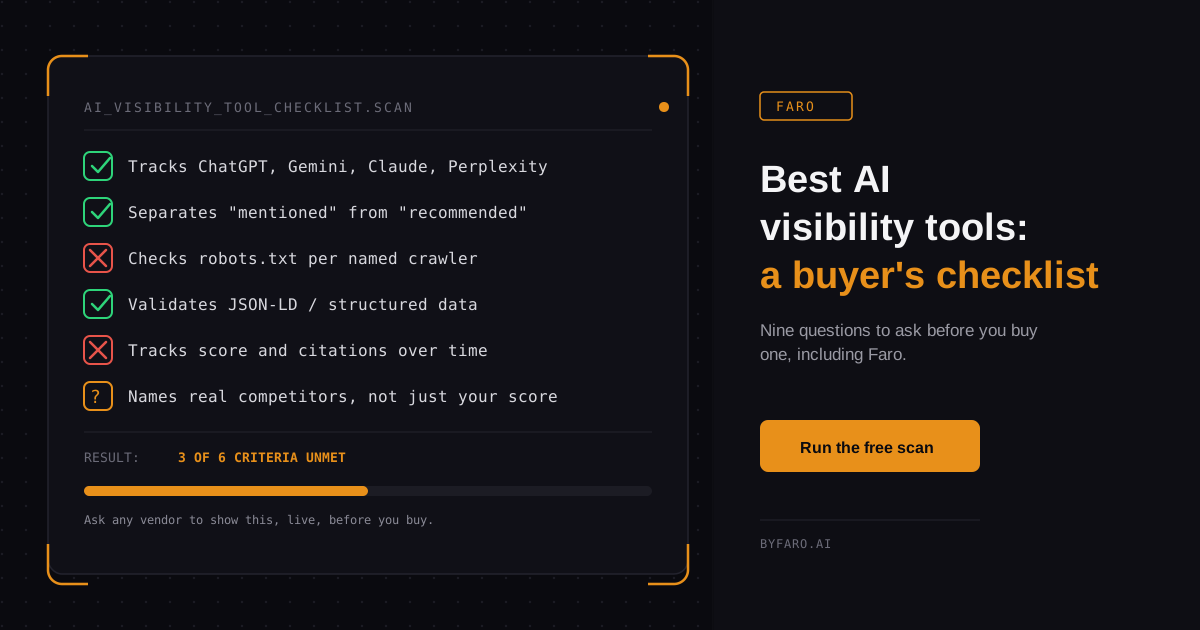
Best AI Visibility Tools: A Buyer's Checklist for 2026
A buyer's checklist for evaluating any AI visibility tool, including Faro: nine checkable criteria covering crawler access, structured data, citation tracking, and competitive benchmarking.
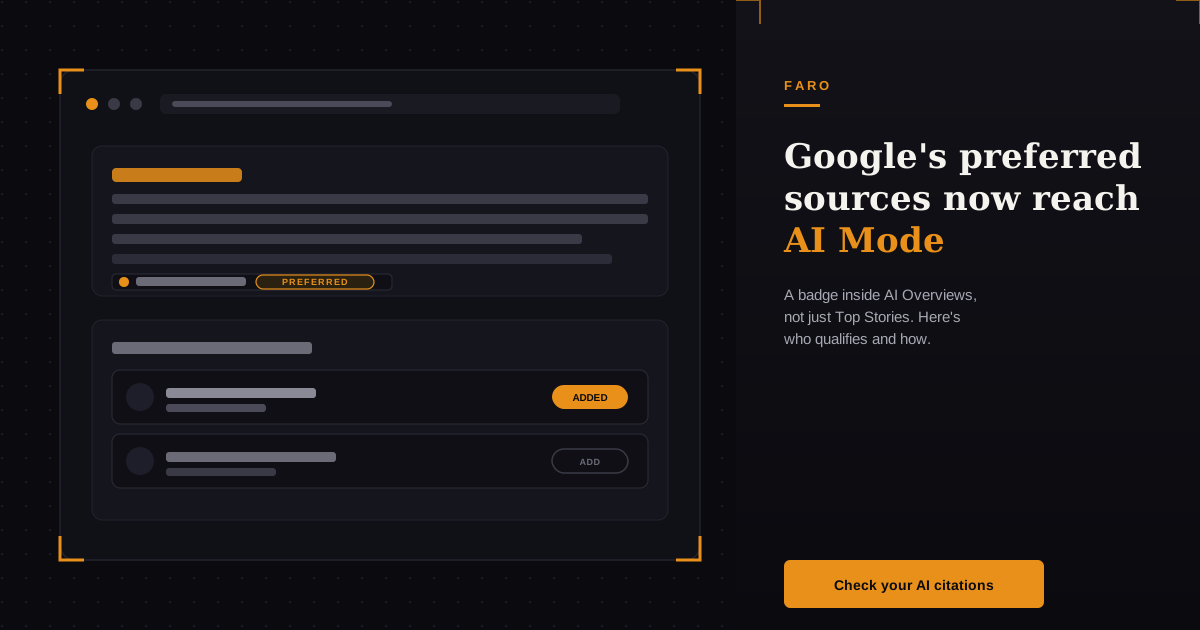
Google Preferred Sources Now Appear in AI Mode: What to Know
Google quietly extended its Preferred Sources badge from Top Stories into AI Mode and AI Overviews. Here's who qualifies, how to add the button, and why it isn't a ranking factor.
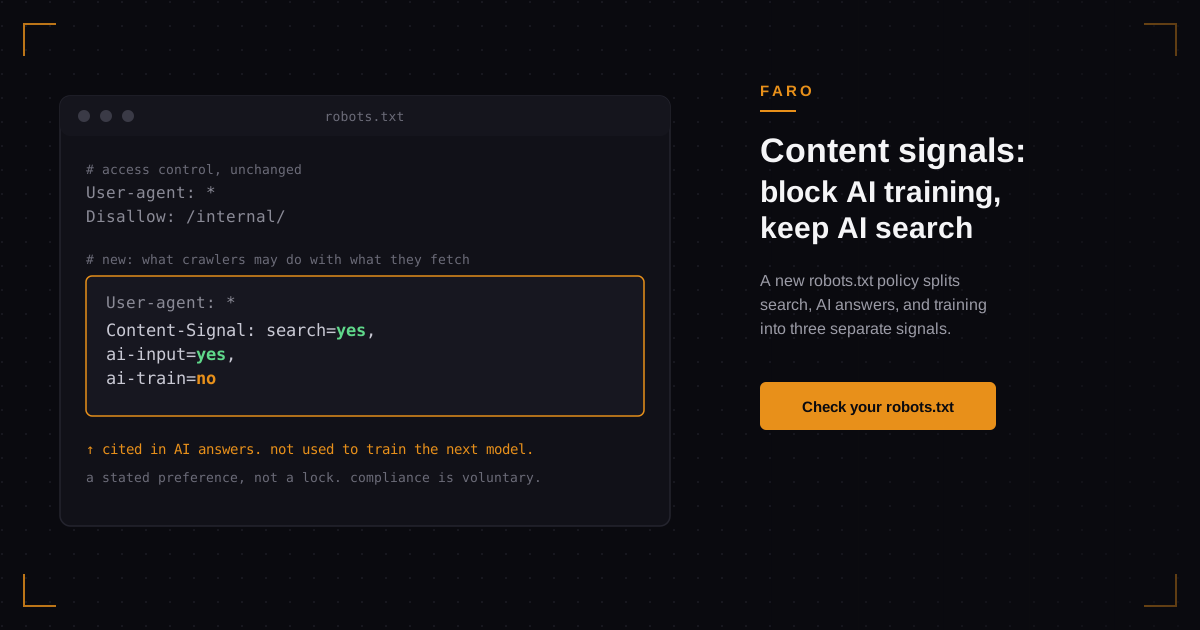
Content Signals: Block AI Training Without Losing AI Search Visibility
A new content signals policy in robots.txt lets a site say yes to AI search and AI answers while saying no to AI training, instead of blocking everything or nothing. Here is what search=, ai-input=, and ai-train= actually control, and how to use them.
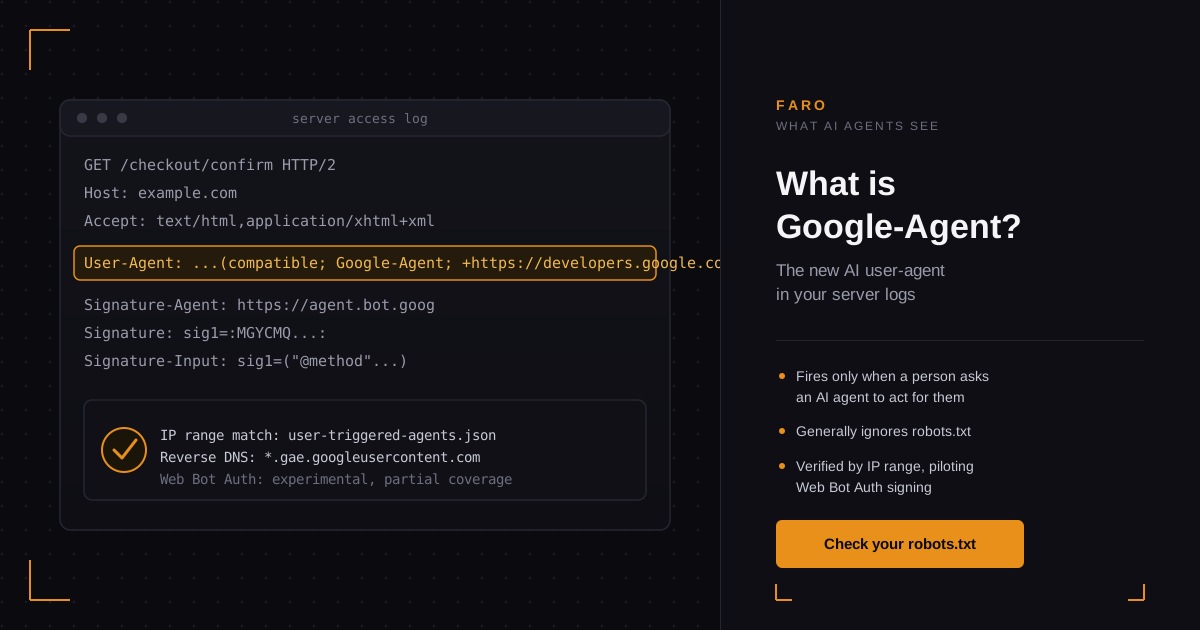
What Is Google-Agent? The New AI User-Agent in Your Logs
Google added a new user-triggered fetcher, Google-Agent, behind Gemini's auto browse feature in Chrome. Here is what it does, how Google verifies it, and whether you should block it.
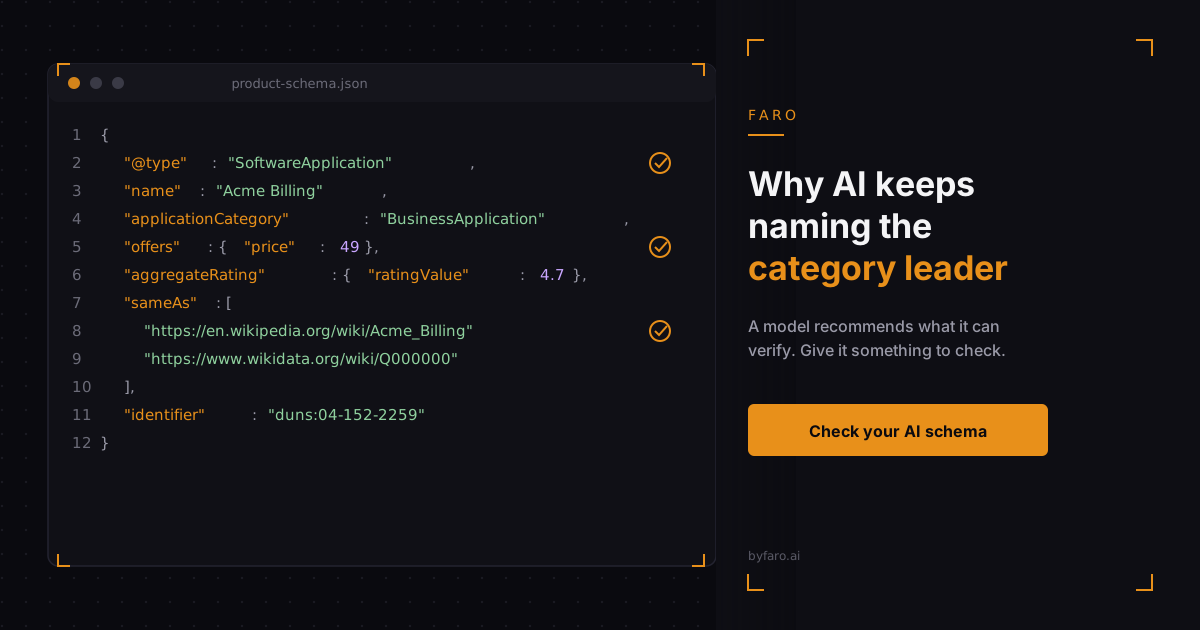
Why Won't ChatGPT or Gemini Recommend Your B2B Software?
AI chatbots default to the category leader when a B2B software brand gives them nothing structured to verify. Here is the SoftwareApplication and Organization schema that changes what gets compared.
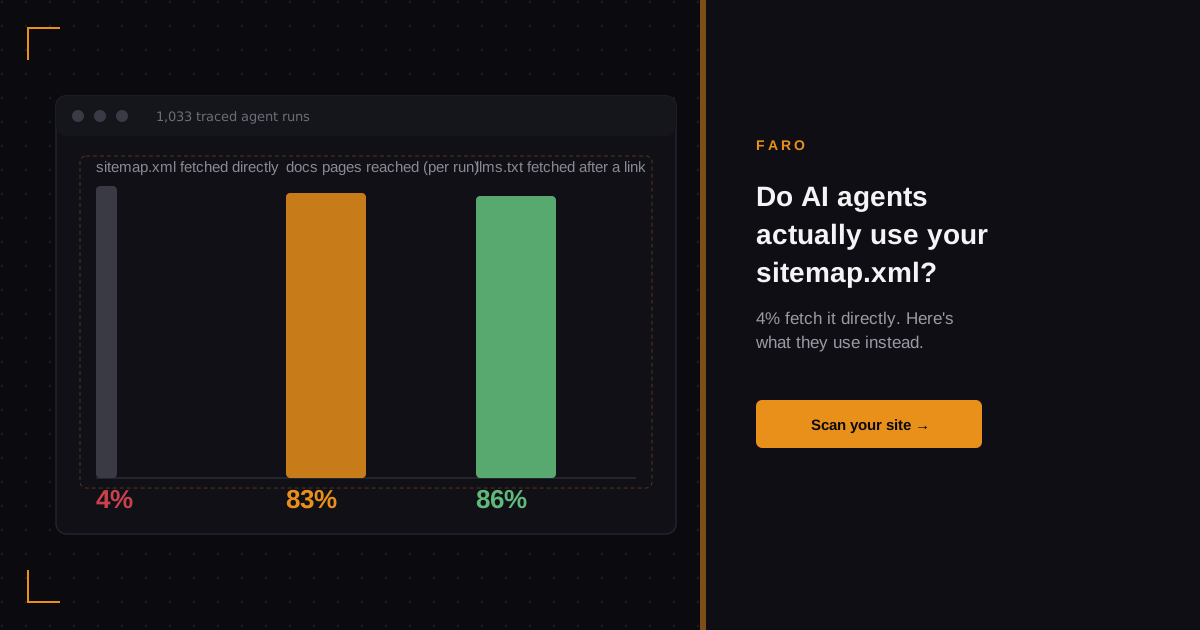
Do AI Agents Actually Use Your Sitemap.xml?
A traced study of 1,033 agent runs found sitemaps fetched directly in only 4% of runs. Here is what ChatGPT, Claude, and Gemini actually fetch instead, and what still helps them find your pages.
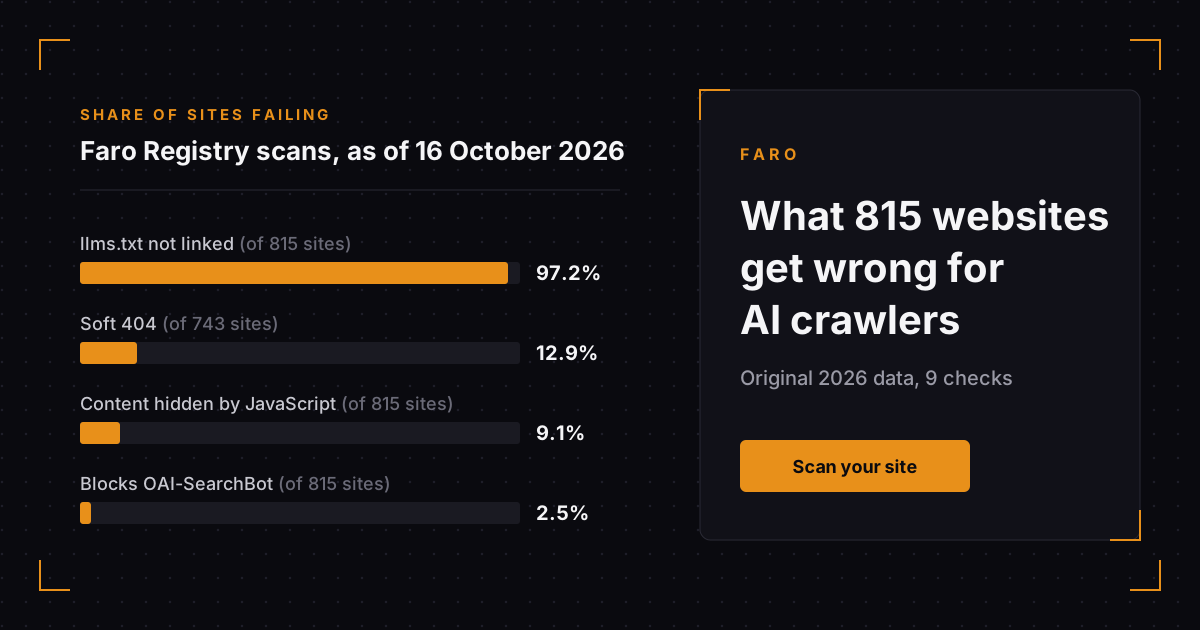
What 815 Websites Get Wrong for AI Crawlers (2026 Data)
Original Faro data on AI crawler readiness across 815 websites as of 16 October 2026: how many hide content behind JavaScript, return soft 404s, leave llms.txt unlinked, or block AI crawlers, and what to fix first.
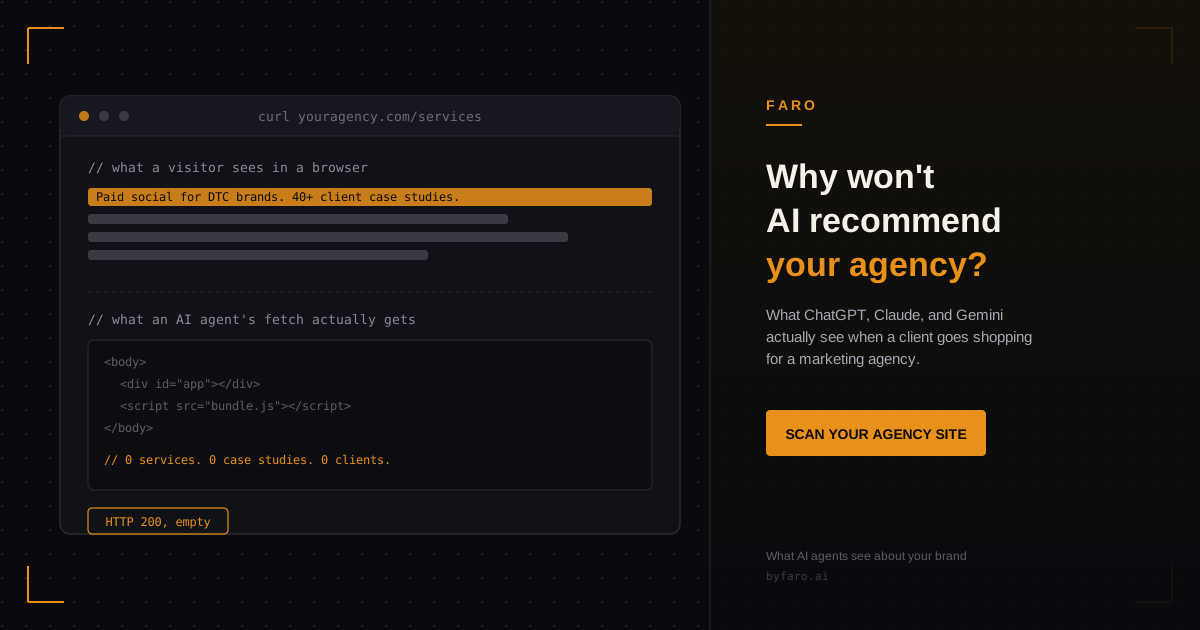
Why Won't ChatGPT or Gemini Recommend Your Marketing Agency?
Most agency websites are built to impress a human scrolling through case studies, not an AI agent reading raw HTML. Here is what ChatGPT, Claude, and Gemini actually see, and the fixes that get an agency back on a client's AI-assisted shortlist.
68 articles published