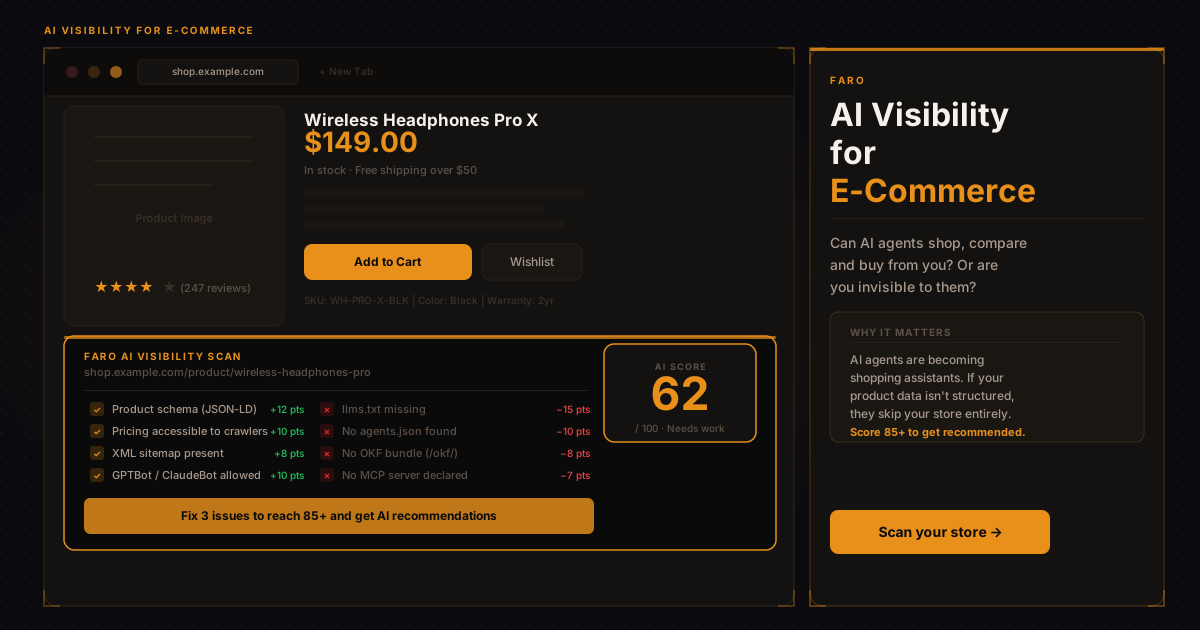
ChatGPT already has a shopping mode. Perplexity surfaces product recommendations with live pricing. Browser agents like Operator can browse your store, compare products, and add items to a cart on behalf of a user. The agent economy isn't coming for e-commerce. It's already there.
What's lagging is the readiness of most online stores to be properly understood and used by these agents. Stores optimized for human browsing and Google SEO are structurally mismatched with how AI agents navigate and evaluate products. This article covers exactly what needs to change — see our AI visibility guide for e-commerce for the industry-specific checklist.
How AI Agents Shop (Differently from Humans)
A human browsing your store uses their eyes. They scan images, read descriptions, check reviews, and navigate menus. An AI agent does something completely different. It looks for structured data, checks specific paths, and reads machine-formatted information. Where a human sees a product page, an agent sees markup.
Specifically, AI agents in e-commerce contexts are doing three things: product discovery (finding what you sell and whether it matches the user's need), price and availability comparison (structured product data with current pricing), and action execution (adding to cart, triggering purchase flows, or requesting a quote). Every one of these depends on your site having the right technical structure in place.
The Seven AI Visibility Checks for E-Commerce
1. Product schema on every product page
The most important structured data signal for e-commerce is Product schema with Offer markup. This tells AI agents your product name, description, SKU, price, currency, availability, and condition in a format they can parse reliably without scraping unstructured HTML.
A minimal Product + Offer markup looks like this (full field reference at schema.org/Product):
{
  "@context": "https://schema.org/",
  "@type": "Product",
  "name": "Adjustable Standing Desk",
  "description": "Electric height-adjustable desk, 55 x 28 inch surface, three memory presets",
  "sku": "SD-5528-BLK",
  "brand": { "@type": "Brand", "name": "WorkStand" },
  "offers": {
    "@type": "Offer",
    "url": "https://example.com/products/adjustable-standing-desk",
    "price": "449.00",
    "priceCurrency": "USD",
    "availability": "https://schema.org/InStock",
    "itemCondition": "https://schema.org/NewCondition"
  }
}
Without this markup, ChatGPT Shopping and other shopping agents have to infer product details from your page layout, which produces errors and frequently results in your products being excluded from comparison responses. Use Faro's AI Schema Creator to generate compliant Product schema for any URL.
2. AI crawler access in robots.txt
Many e-commerce stores added aggressive crawler blocks over the years to prevent competitors from scraping pricing. These blocks frequently catch AI agents too. Check your robots.txt to confirm GPTBot, ClaudeBot, PerplexityBot, and Google-Extended are explicitly allowed.
User-agent: GPTBot
Allow: /

User-agent: ClaudeBot
Allow: /

User-agent: PerplexityBot
Allow: /

User-agent: Google-Extended
Allow: /
If you have legitimate reasons to restrict certain paths (admin pages, checkout flows, account pages), block those specifically rather than blocking AI crawlers globally. Google's official robots.txt documentation explains how specificity works. Use Faro's robots.txt Analyzer to check whether AI bots are currently blocked on your store.
3. Pricing transparency on accessible pages
AI agents struggle with stores that hide pricing behind account walls, login gates, or “call for pricing” patterns. When an agent cannot find a price, it either reports the product as unavailable or omits it from comparisons entirely. If you sell B2C, ensure all current pricing is publicly accessible and marked up with Offer schema. Run a pricing audit to see how your pricing pages currently read to an agent.
If you sell B2B with negotiated pricing, consider publishing a base pricing page with list prices and a note that volume discounts are available. This gives agents enough to work with for initial comparisons while leaving room for negotiation.
4. llms.txt with product category context
Your llms.txt file should tell AI models not just what your business is, but what product categories you carry, who you serve, and what makes your selection different. Include:
- Your main product categories with brief descriptions
- Your customer profile (who typically shops here)
- What distinguishes your selection (curation, brand exclusives, pricing, specialty)
- Links to your main category pages and your sitemap
This context helps AI models route relevant queries to your store rather than to a competitor with a more prominent training data presence.
5. Sitemap with product URLs
A comprehensive sitemap that includes all product URLs helps AI agents with web retrieval (like Perplexity) discover your full catalog. Include your sitemap URL in robots.txt, and keep it updated. Stores with thousands of products should ensure their sitemap is paginated correctly and that all URLs resolve to live pages.
6. Review and rating schema
AI agents making product recommendations factor in reviews. AggregateRating schema communicates your product ratings, review counts, and score directly in your markup, making it available for structured comparison without the agent having to parse review sections from your HTML.
"aggregateRating": {
  "@type": "AggregateRating",
  "ratingValue": "4.7",
  "reviewCount": "238",
  "bestRating": "5"
}
7. Content signals for non-browser agents
Not all AI agents browse your pages live. Many rely on cached content or training data. The content-type and link header signals (X-Robots-Tag: index, Link: rel="alternate") help AI systems understand the structure of your content and find canonical representations of your pages.
How does your store score?
Faro's AI Visibility Checker checks all seven signals above for any URL in under 30 seconds. Most e-commerce stores fail 4 or more checks.
The Category Discovery Problem
There's a higher-level problem beyond individual page markup: AI models need to know your store exists and what it carries before they can recommend it. This is the category discovery problem.
When someone asks “where can I buy [product type]?”, AI models surface stores that are well-represented in their training data and structured for agent access. Large retailers with massive training data presence will always have an advantage here. But smaller specialized stores can compete by being highly specific and authoritative in their niche: clear category descriptions, strong llms.txt content about their specialty, and solid structured data that signals expertise.
A specialty outdoor gear retailer that clearly signals “we specialize in ultralight backpacking equipment” through multiple structured channels will outperform a general sporting goods store on queries like “best place to buy ultralight backpacking gear” even if the general store has higher overall traffic.
Browser Agents and Checkout Accessibility
Browser agents like Operator are the most demanding category of agent for e-commerce. They don't just read your site: they navigate it, interact with filters, add products to carts, and attempt checkout on behalf of users. This creates both an opportunity (frictionless purchase flow) and a risk (broken agent experiences that create negative impressions).
To support browser agents through checkout:
- Ensure add-to-cart actions are accessible via standard HTML form elements or clearly labeled buttons, not hidden behind JavaScript-only interactions
- Make checkout flow guest-accessible without requiring account creation
- Provide clear, parseable error messages if products are out of stock or unavailable for the user's region
- Expose product availability by variant (size, color) in a structured way rather than requiring JavaScript interaction to discover
The Compound Effect
AI visibility for e-commerce compounds over time in a way traditional SEO doesn't. When an agent has a good experience on your store (finds products easily, gets accurate pricing, completes a purchase successfully), that creates a positive signal that influences future recommendations for similar queries. When an agent has a bad experience (can't find pricing, hits JavaScript walls, encounters broken flows), you get deprioritized.
This means the stores that invest in agent readiness now will accumulate a signal advantage that becomes harder to close as agent usage scales. The gap between agent-ready and agent-blind stores will grow, not shrink. Traffic benchmark data from June 2026 shows AI traffic grew roughly 10x in the past year while organic clicks from Google fell 21% on average — the compound effect is already happening.
Prioritizing Your Fixes
For the full breakdown of how these checks map to your AI readiness score as an online retailer, see Faro's AI Readiness for E-commerce guide. If you have limited time and resources, prioritize in this order:
- Unblock AI crawlers in robots.txt (10 minutes, high impact)
- Add Product + Offer schema to your top 20 product pages (2 to 4 hours, highest impact)
- Publish llms.txt with category and specialty context (1 hour)
- Expand Product schema across your full catalog (ongoing)
- Add AggregateRating schema to reviewed products (ongoing)
- Publish agents.json if you have a public API (1 to 2 hours)
Start with a scan. Faro's AI Visibility Checker shows you exactly which of these are missing on your store and generates the fix files you need.
In Short
AI shopping agents are active now. They browse product catalogs, compare pricing, read reviews, and make purchase recommendations on behalf of users. E-commerce stores that have Product schema, open AI crawler access, llms.txt context, and functional checkout flows will be recommended more often and complete more agent-mediated purchases. Stores that haven't made these changes are already at a disadvantage, and the gap is widening as agent usage scales.
Frequently Asked Questions
Will AI shopping agents compete with my organic traffic?
In the short term, some users who previously visited your site directly will instead get product recommendations from AI agents. But the net effect is likely positive for stores that are well-structured: agents expand the top of the funnel by surfacing products to users who wouldn't have found them organically. The key is being recommended, not just accessible.
Does my e-commerce platform support Product schema automatically?
Shopify, WooCommerce, and BigCommerce all have built-in or plugin-based structured data support. However, the default implementations often miss fields that AI agents rely on, particularly accurate availability, variant-level pricing, and AggregateRating. Verify your schema output with Google's Rich Results Test or Faro's scan rather than assuming your platform has it covered.
Should I worry about AI agents scraping my pricing?
Publicly listed pricing is already publicly available. Blocking AI agents from accessing it doesn't prevent competitors from scraping it manually; it only prevents AI agents from recommending your products in comparison responses. The calculus almost always favors allowing access.
How do I track how much traffic is coming from AI agents?
Most AI agents identify themselves via their user agent string (GPTBot, ClaudeBot, PerplexityBot, etc.). You can filter server logs or analytics by these strings to estimate agent traffic. As agent usage grows, purpose-built analytics for agent traffic will become important. Faro's AI Signals feature tracks mentions and citations in AI responses and will expand to include traffic attribution over time.